EDITORIAL / CULTURE
Slopcore Is Making Everyone a Better Creator
What happens when a music movement starts changing how people create everything else?
SLOP REVOLT / EDITORIAL ·
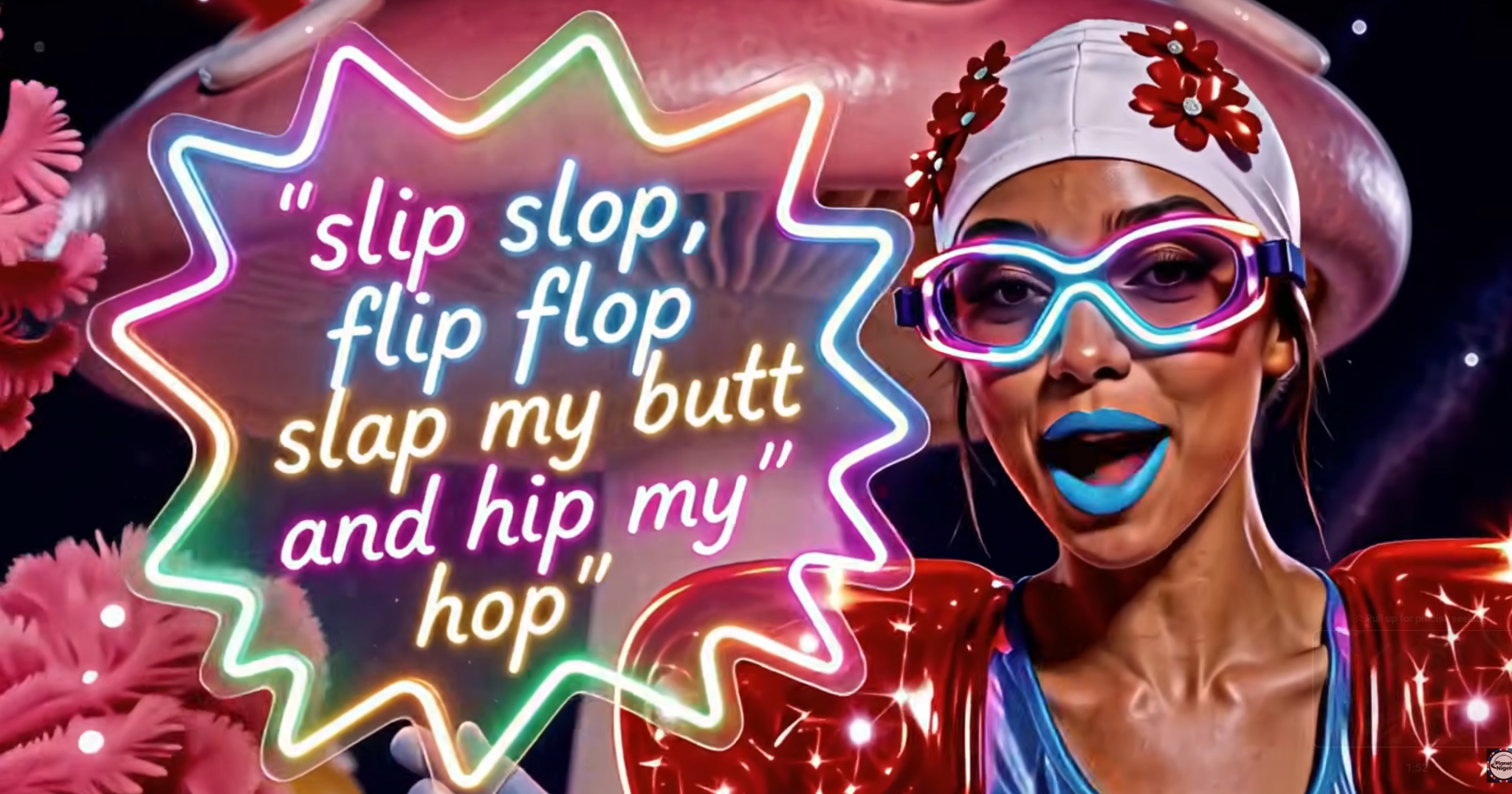
Something interesting is happening to the people making Slopcore.
They start out wanting to make a music video.
Maybe they've generated a song they like. Maybe they've discovered an interesting AI model. Maybe they just want to see what happens when they put a synthetic character in front of a camera.
But somewhere along the way, something changes.
They're no longer just making music videos.
They're realizing that the skills and techniques they've developed through Slopcore are helping them create other kinds of content at a level of quality they couldn't achieve before.
The Accidental Filmmakers
Consider what goes into a typical Slopcore production.
You need music, characters, environments, movement, camera angles, editing, timing, and some way of bringing everything together.
Even a relatively simple video introduces creators to disciplines that once required specialized equipment, expensive software, or considerable technical experience.
A person who has never animated anything suddenly finds themselves directing characters.
Someone who has never edited a film starts thinking about transitions, pacing, and visual storytelling.
A hobbyist experimenting with AI discovers techniques that improve everything from short films to promotional videos.
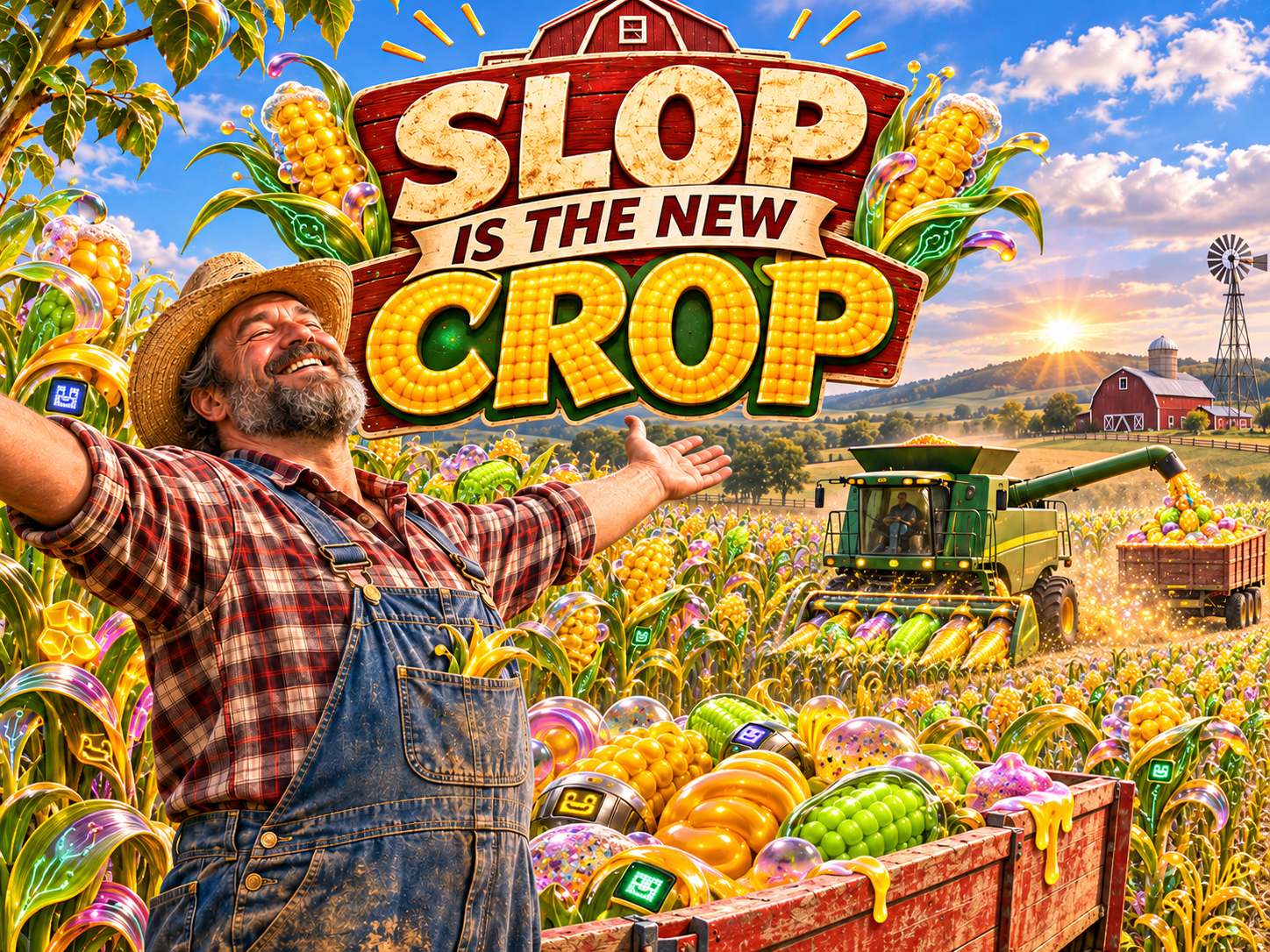
And the tools keep improving.
What began as a collection of imperfect generations is becoming an increasingly capable creative process.
Eight Seconds Can Change Everything
Sometimes the most interesting results aren't even full music videos.
They're eight-second clips.
A character walks through an impossible environment. A camera circles a synthetic performer. A short scene combines lighting, movement, and atmosphere in a way that would have been difficult for an individual creator to achieve just a short time ago.
We're seeing impressive little experiments from people who might never have considered themselves filmmakers.
And the quality is improving.
Not simply because the models are getting better, although that's certainly part of it.
The creators are getting better, too.
They're learning what works, what doesn't, and how to get more from the tools they already have.
And here's the important part: those improvements don't stay confined to music videos.
The same creator who struggled to make a convincing scene a few months ago may now be producing animations, short films, comedy sketches, or visual effects that are dramatically better than anything they previously attempted.
Slopcore provided the practice. Now they're applying what they've learned everywhere else.
Slopcore Changed the Assignment
This might be one of Slopcore's most important contributions.
It gave people a format to work within.
A song provides the structure. The beat suggests the editing. The lyrics inspire imagery. The performer provides a focal point.
Instead of staring at an empty screen wondering what to create, you have a starting point and a reason to experiment.
Need a scene for the chorus? Try image-to-video generation.
Want the same character in several locations? Explore character consistency and reference models.
Need something interesting during an instrumental drop? Experiment with camera movement, overlays, HUDs, or visual effects.
Each creative challenge introduces another technique.
Slopcore isn't just giving people new things to make. It's pushing them to become better at making things.
And those improvements carry over into everything else they create.
The Tools Are Escaping the Genre
The same techniques used to create a Slopcore video can improve almost any kind of visual content.
Character animation becomes useful for short films. Consistent digital performers become recurring personalities. Camera control and visual effects improve promotional videos, comedy sketches, tutorials, and other productions.
Even a simple eight-second clip can become something considerably more impressive when its creator understands lighting, movement, framing, and editing.
What's particularly interesting is how people are learning to combine tools rather than depend on any single application.
An image model creates a character. A video model provides movement. An audio model supplies a voice. Editing software brings everything together.
Each technique improves the creator's ability to produce something convincing.
And once learned, those skills can be applied to practically any project.
Slopcore may be a music-centered movement, but the creative capabilities it's helping develop extend far beyond music.
The Creative Ceiling Keeps Moving
There was a time when producing even a modest animated scene required substantial technical knowledge.
Today, someone with a computer, an idea, and access to the right tools can begin experimenting.
That doesn't mean filmmaking has become effortless. Good storytelling, composition, timing, and creative judgment still matter.
But the distance between imagining something and producing a convincing result has become dramatically shorter.
And something else is happening.
People who might once have settled for a simple slideshow or a rough animation are discovering that they can now produce content with convincing movement, consistent characters, and cinematic presentation.
They're raising their own standards because they've discovered what they're capable of.
The tools improve. The creators improve. And the quality of their work improves across the board.
What seemed impossible a few months ago is becoming part of an ordinary creative workflow.
More Than a Music Genre
We've spent considerable time discussing what defines Slopcore.
Its musical roots. Its synthetic performers. Its futuristic imagery. Its HUDs and overlays, and unapologetically artificial aesthetic.
Those characteristics matter.
But perhaps we're beginning to see another part of its influence.
Slopcore is becoming an unexpected training ground for a new generation of digital creators.
People arrive wanting to make music videos. They experiment with models, discover techniques, overcome limitations, and gradually develop capabilities they can apply to entirely different projects.
And the more they experiment, the better their work becomes.
The results won't always be polished. Some experiments will fail spectacularly. Others will produce something nobody expected.
But the experience carries forward.
Slopcore isn't just producing better music videos. It's helping people become better creators.
And that may turn out to be one of its most important contributions.
Because someone who learns to produce an impressive eight-second clip for a song today might use those same skills to create something extraordinary tomorrow.
Something that has nothing to do with Slopcore at all.
SlopRevolt documents the emerging Slopcore scene, the people creating it, and the evolving tools and techniques influencing digital creativity far beyond the genre.