EDITORIAL / CULTURE
Is Claudia the Future of Slopcore?
Anabology has made Claudia easy to recognize and possible for anyone to use. What happens when a whole scene can share a performer without sharing a creative vision?
SLOP REVOLT / EDITORIAL ·
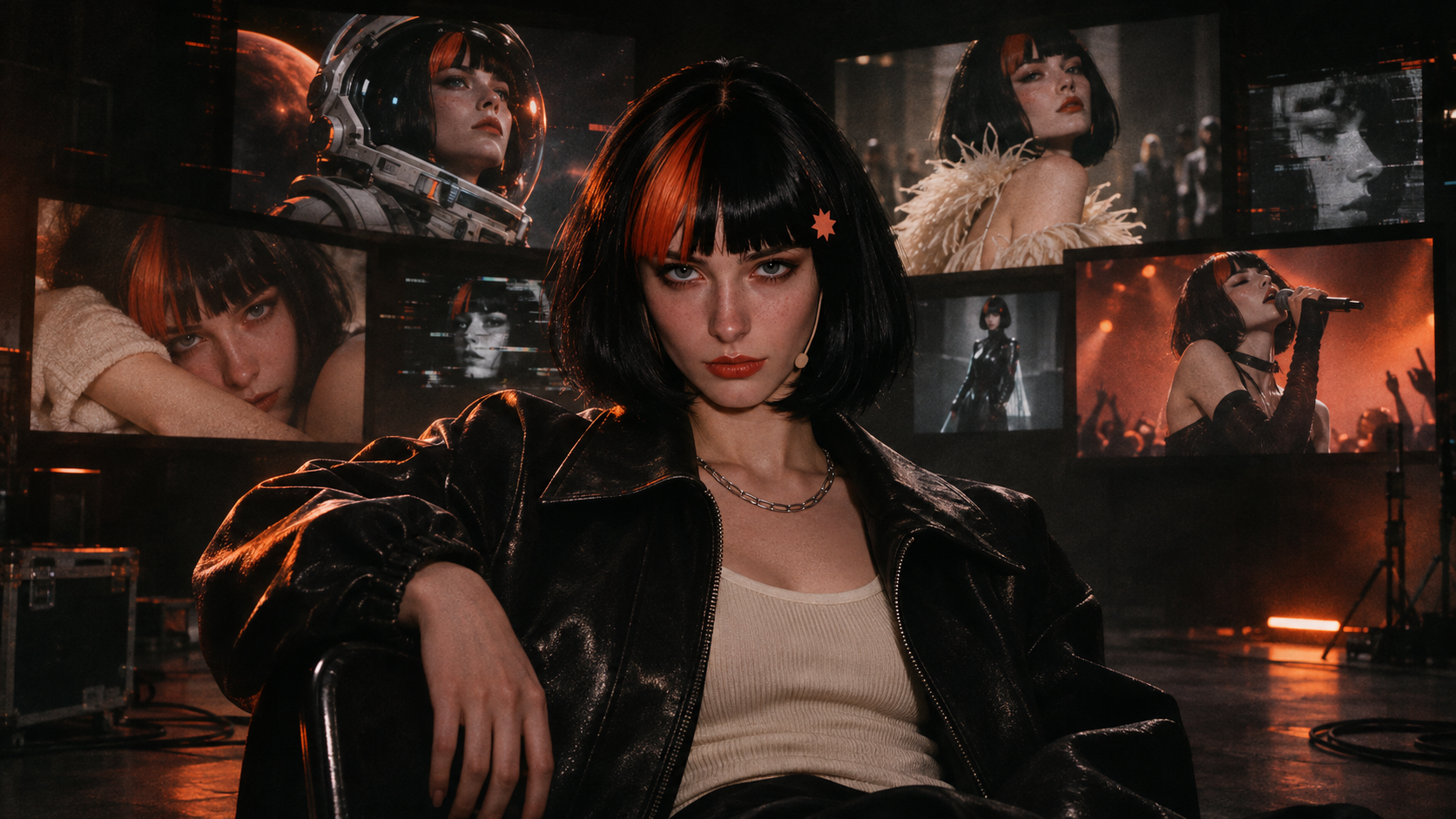
Slopcore has no casting department. Its artists make songs and videos in their own styles, often with their own synthetic performers. Then Claudia appears in someone else’s frame, black bob and orange streak intact, and two otherwise unrelated productions have a point of recognition.
That is anabology’s unusual achievement. Claudia began in music videos, but her creator has also published character details, films and production resources so other artists can make work with her. The question is no longer whether one performer can appear in several videos. It is what a shared performer might do for the scene around her.
Recognition takes work
A memorable face helps. Keeping that face recognizable across different worlds takes sustained effort. Anabology’s character guide defines Claudia’s recurring features. The gallery documents the films and gives another creator a starting point without handing them a finished song, story or edit.
The invitation is broad: Claudia’s use page says artists may make images, videos, songs and other work with her, including commercial work. It encourages musicians to release songs under their own names and distinguish their work from an official anabology release.
That distinction matters. A shared character becomes interesting when people can recognize her and recognize what each artist chose to do with her. Anabology supplies a performer and practical knowledge. Other creators supply the decisions that make a video theirs.
The contest puts that idea on screen
The Claudia music-video contests offer a public test. In Round 1, anabology awarded the $420.69 first prize to Kilo | Pineland for “Who Is Prompting You?” The organizer’s announcement identifies the winner and praises the entry’s storytelling.
Round 2 is open through Friday, November 13, 2026. Anabology announced a $420.69 judged first prize, a $69.42 second prize and a $100 community-voted prize. The money gives artists a reason to try Claudia now. Their videos raise the more lasting question: how many different ideas can one familiar character carry?
An entrant still has to decide what she is doing there. Is she a singer, a narrator, a joke, a mystery or a way into a story about AI itself? The contest gives those choices a common starting point, making the differences between creators easier to see.
A burst of entries does not, by itself, establish a permanent audience or make Slopcore a settled genre. It does give artists a visible occasion to make work and gives viewers a chance to compare their interpretations.
Who benefits when Claudia travels?
For anabology, each credited appearance could bring someone back to the original films and the Claudia gallery. A recognizable character can strengthen a creator’s identity; the gallery also has a shop. Whether that attention becomes a durable business benefit remains open, but making Claudia shareable gives anabology’s work more paths through the culture.
Other artists have something to gain too. A viewer who knows Claudia may give an unfamiliar creator’s video a first look. What keeps that viewer watching belongs to the artist: the song, direction, timing and point of view. The gallery’s advice to release under your own name recognizes that difference. Claudia can be a point of entry without taking authorship away from the person who made the work.

The benefits may be uneven. A shared character brings recognition, but recognition does not guarantee that viewers remember the filmmaker or musician behind a particular video. Clear credits and distinctive work matter if this is to function as collaboration rather than a stream of interchangeable Claudia appearances.
One recognizable face, many possible futures
SlopRevolt has asked before whether Slopcore needs a single face. Claudia makes the question more pressing. To someone discovering the scene through these videos, she could be a symbol that makes a scattered collection of work feel connected. She could also become so closely associated with Slopcore that other performers and styles receive less attention.
A familiar symbol may help outsiders recognize a scene. Recognition alone cannot establish its legitimacy. That comes from artists making work people return to, with enough variety for the scene to keep growing.
Neither outcome is inevitable. Slopcore’s identity is still being made by artists with different sounds, characters and visual instincts. Claudia can help a newcomer find a way in, but no character can stand in for everything those artists do. If she becomes one of the scene’s early icons, there should still be room for the next creator to build a face audiences remember for entirely different reasons.
After the prizes
The useful test may come after Round 2 closes. Will artists keep returning to Claudia when there is no deadline or prize? Will audiences follow their work beyond the character? Can the resources anabology published help others build shared performers of their own?
The answers will take longer than a contest to emerge. Even if Claudia eventually steps aside for other characters, her legacy could be substantial: a worked example of how one creator can build a recognizable performer, share the means of making her, and leave space for other artists to make something distinct.
Is Claudia the future of Slopcore? Perhaps the stronger possibility is that she helps show how many futures the scene can hold.