OPINION / FROM THE EDITOR
The AI Slop Flood: How Do Local Creators Stand Out?
As AI creation moves closer to the share button, what separates a carefully made video from another disposable post?
GARY / SLOP REVOLT ·
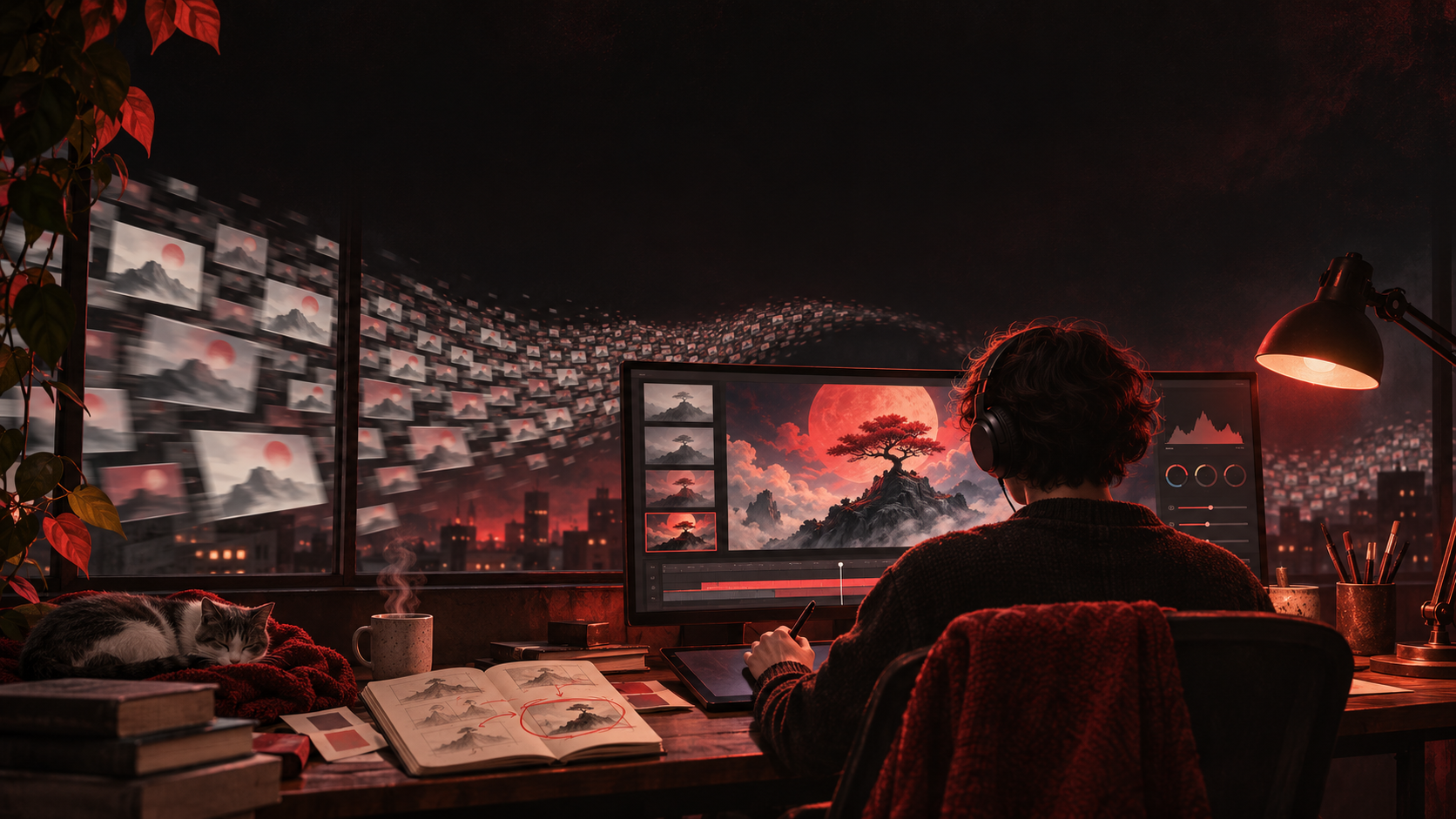
I woke up thinking about the word slop again. This time, I found myself understanding the critics a little more than I expected.
For a while, it was easy to dismiss the label. People would see that a song or video used AI and decide, before watching it, that nothing worthwhile could be there. Meanwhile, some of us were spending hours or days learning tools, revising scenes, changing lyrics, fixing edits, and trying to make something we would actually want to watch. Calling all of that slop was lazy.
But I also look at my feeds and see plenty of AI posts that feel disposable. A quick result appears, gets uploaded, and is replaced by the next one. I can understand why a viewer who sees enough of those posts starts expecting more of the same.
The tools are moving closer to everyday posting. Meta's Vibes lets people create or remix AI videos and cross-post them to Facebook Stories and Reels. Facebook has also introduced simpler AI-assisted editing and sharing tools, and Meta announced plans to bring its Muse Image generator to Facebook. That does not prove one new feature caused every weak post in my feed. It does show where things are heading: making and sharing synthetic media keeps getting easier.
So where does that leave the people trying to make something good?
The Pool Just Got More Crowded
I want AI tools to be accessible. I built Get Going Fast around the idea that people should be able to run creative tools on their own computers without becoming programmers first. More people getting to make things is a good development.
It also means more work to sort through. More experiments, more first attempts, more posts made because the button was there. Some will be wonderful. Some will be forgettable. A few will be posted with hardly a thought behind them.
When the feed fills up, the careful creator loses the benefit of the doubt. Viewers cannot see the rejected drafts, the broken renders, or the evening spent getting a chorus right. They see one thumbnail and a few seconds of video. If the last ten AI posts felt interchangeable, why should they assume the eleventh is different?
That is the challenge facing local AI makers and Slopcore artists. We need to give people a reason to stay.
Hours Spent Are Not a Quality Score
I could say the difference is effort. Often it is. I know people who spend days working through a song or a video while someone else uploads their first output in seconds.
But time alone cannot be the test. A quick joke can be sharp. A long production can still be dull. Working locally does not automatically make an image better, just as using a cloud service does not make a creator careless.
What matters is the set of choices behind the result. Why this song? Why this character? Why did the scene change on that line? What did the creator remove because it weakened the piece? Can you recognize their point of view after the tool's default style has faded away?
Those are questions we can answer through the work itself. We can also help viewers see the answers.
Show the Choices
One way to stand out is to let people into the process. Share the discarded frame beside the finished one. Explain why you rewrote a verse. Credit the people and tools involved. Link to the original song or video. Say what you were trying to make the audience feel.
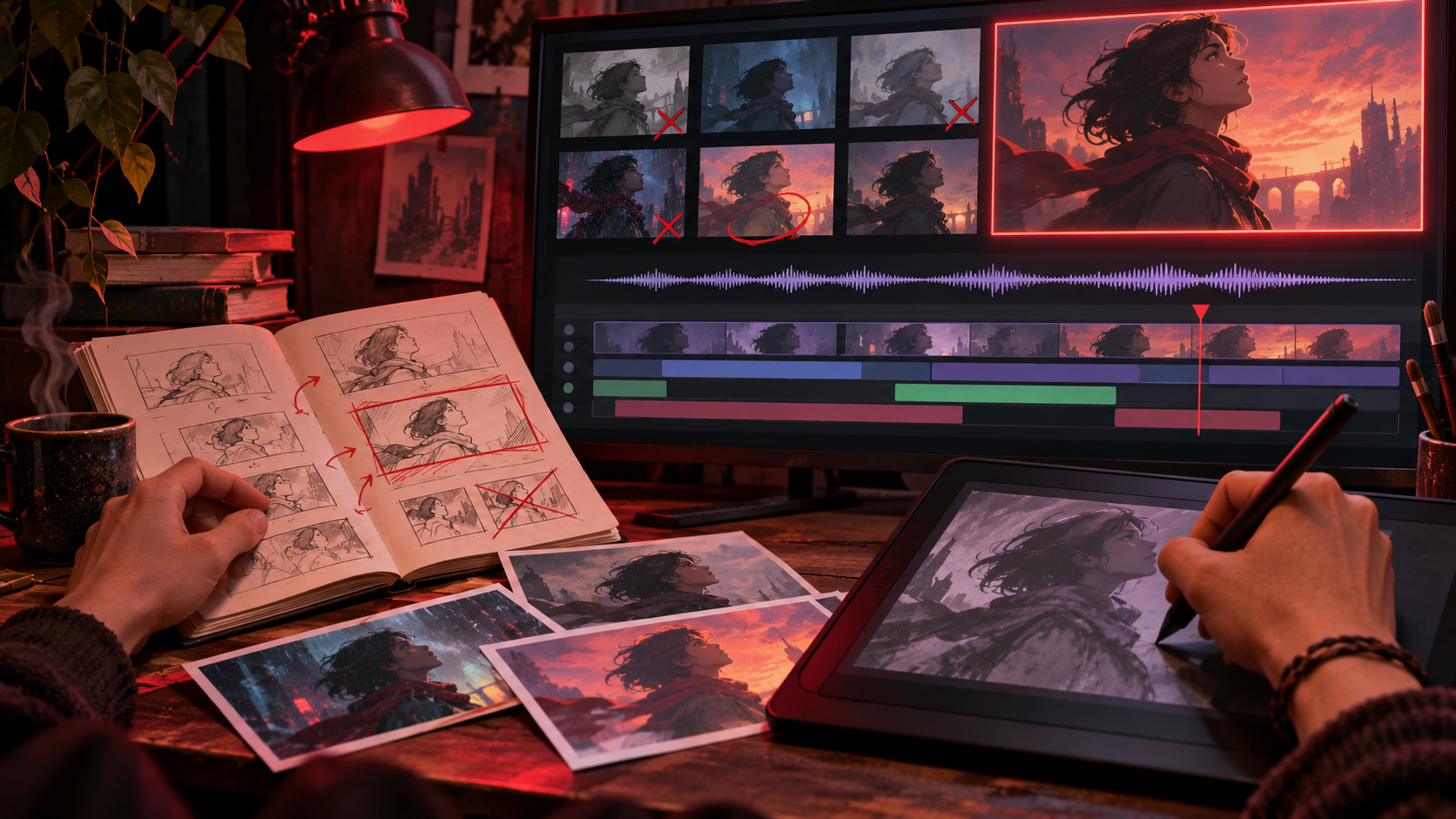
This is not a demand for every artist to publish a technical report. A sentence or two can be enough: I tried three endings and kept the quiet one because the chorus needed room to breathe. That tells me more about a maker than a list of model names.
And the finished piece still has to earn attention. A strong opening, a memorable hook, a visual idea that develops, an edit that knows when to stop. We have written about how Slopcore teaches those skills. Those choices become more valuable as the amount of easy output grows.
The answer is not to make every video bigger or more expensive. A small, deliberate work can say more than a lavish sequence of shots with nothing holding it together.
Do We Need Another Name?
There is a contradiction here, and I feel it. We have argued against people judging art simply because AI was involved. Now I am arguing that we should make distinctions among AI-made work ourselves.
I think we have to. The distinction should come from what someone made and how they shaped it, not from whether they used a particular model, spent a particular amount, or belong to a favored group. Beginners deserve room to learn. A first attempt can be the beginning of something remarkable.
Maybe Slopcore is already the right name for this corner of the scene. Maybe another term will emerge for a particular style. Renaming alone will not persuade anyone who has already decided that all AI work looks alike.
So perhaps we keep making high-quality slop, if that is what people insist on calling it. Make the kind of work that causes someone to watch twice, ask who made it, and follow the next thing that person creates.
The feed will keep getting crowded. That part is out of our hands. The choices inside our own songs and videos are still ours.
Let the work show the difference.
Gary is the founder and editor of SlopRevolt. This is an opinion editorial about creative practice, not a claim that any one Meta product caused a measured increase in low-quality posts. SlopRevolt and Get Going Fast share an owner.