CULTURE / EDITORIAL
Slopcore or Popcore?
Are we watching the birth of a new music genre, or an entirely new family of creative cultures?
SLOP REVOLT / CULTURE ·
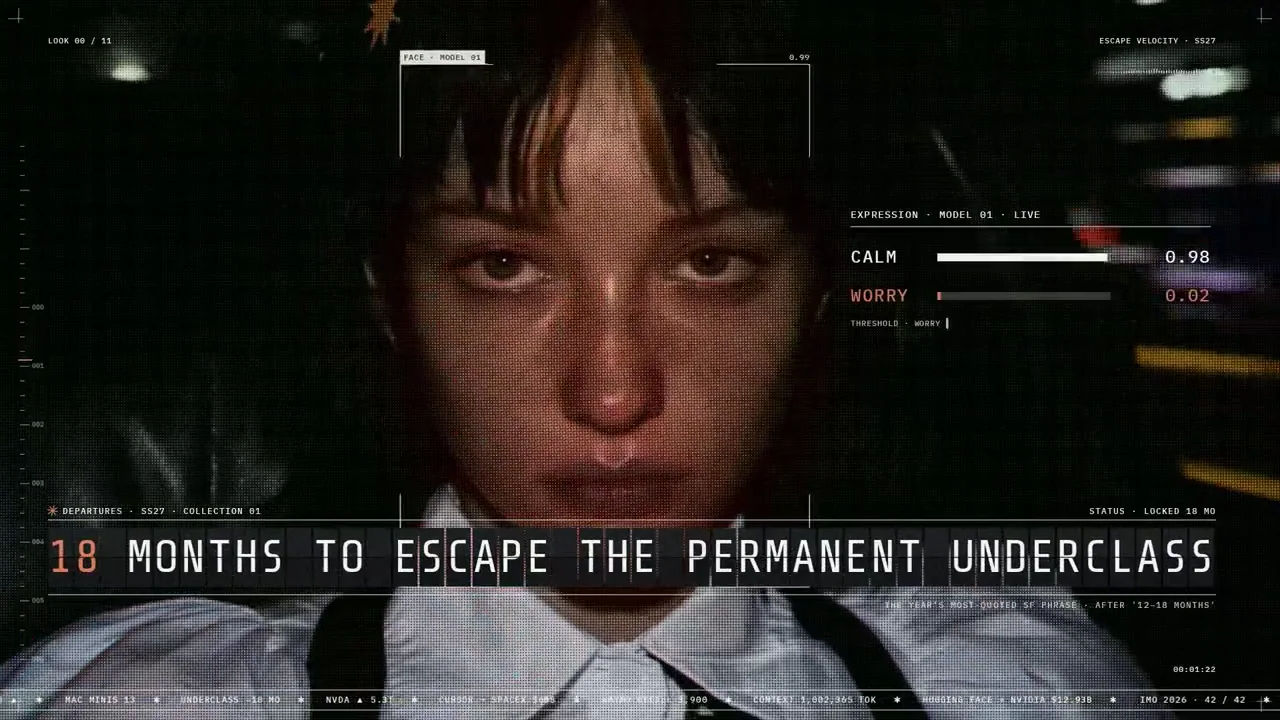
There's something interesting happening in Slopcore.
As the scene grows, so does the number of creators identifying their music as Slopcore. But some of these productions barely resemble the sounds or visual characteristics that helped establish the movement.
Sometimes it's simply an AI-generated pop song with lyrics appearing on screen. No synthetic performers, no futuristic aesthetic, no recognizable Slopcore musical influences. Just AI music with a Slopcore label.
Does putting words on a screen and calling something Slopcore actually make it Slopcore?
Or are we watching the term gradually become a catch-all for anything made with AI?
And if that's happening, perhaps the answer isn't to argue over who belongs. Perhaps we're beginning to discover that there are different kinds of -core waiting to be recognized.
The Sound That Started It
Slopcore didn't emerge from nowhere.
Much of its early musical character draws from dubstep, melodic electronic music, and the synthesizer-heavy sounds of the 1980s.
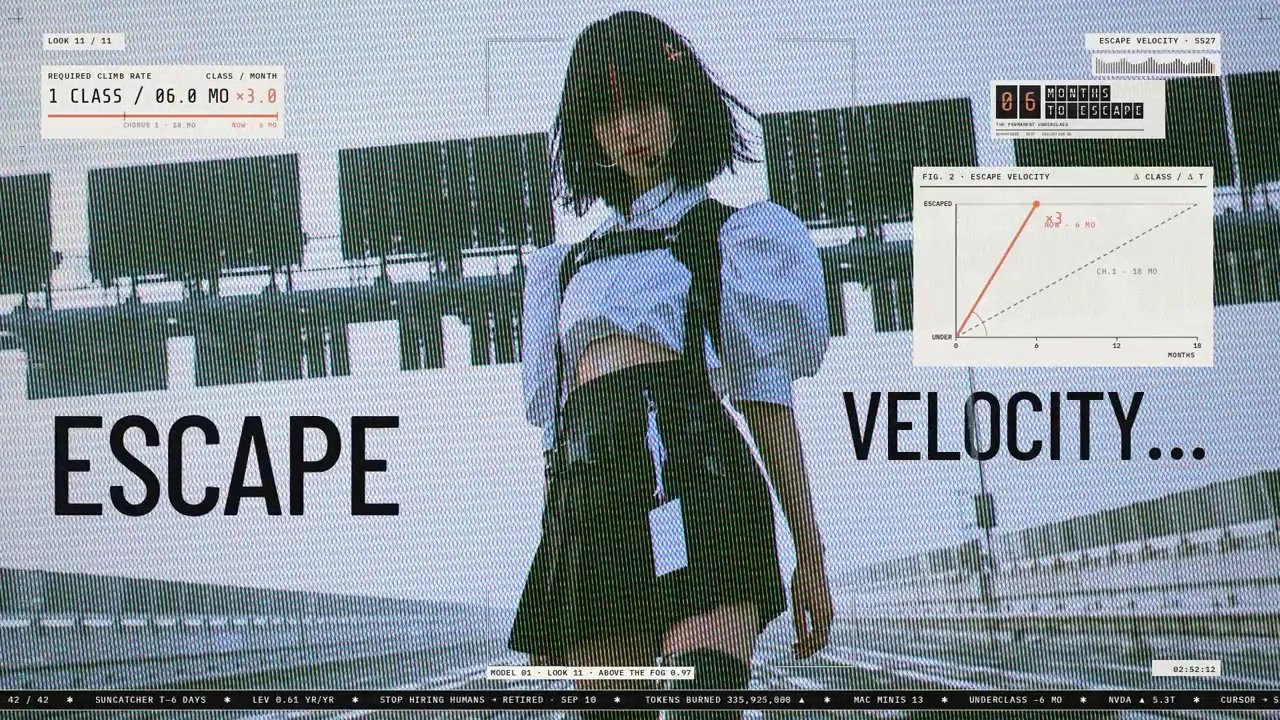
Any discussion of its emerging identity should also recognize anabology, whose Escape Velocity helped bring Slopcore to a wider audience in September 2026.
With his synthetic performer Claudia, anabology helped establish a recognizable combination of futuristic imagery, digital performers, electronic music, and an unapologetically artificial presentation.
His work didn't invent every ingredient, but it helped bring them together into something people could recognize and call Slopcore.
Heavy bass meets soaring melodies. Nostalgic synthesizers collide with futuristic imagery. The result can be aggressive and beautiful, sometimes within the same thirty seconds.
But those are roots, not requirements.
Already, plenty of productions labeled Slopcore have little connection to dubstep or melodic electronic music. Some are straightforward pop songs accompanied by AI-generated visuals.
And that's where the conversation gets interesting.
When the Pop Starts Creeping In
Imagine a catchy three-minute pop song.
Clean production, conventional structure, perhaps a synthetic voice, and a perfectly pleasant chorus.
The accompanying video might consist of unrelated AI-generated scenes, a few animated lyrics, or simply a sequence of images.
Nothing particularly futuristic. No recognizable Slopcore musical influences. Little connection to the visual language developing around the scene.
Yet the creator calls it Slopcore.
There's nothing necessarily wrong with the music. It might be excellent.
But using AI doesn't automatically determine a song's genre, any more than using a synthesizer automatically makes something synthwave.
The question isn't whether that music deserves an audience. Of course it does.
The question is whether it shares enough of Slopcore's emerging identity to make the label meaningful.
Slop Isn't an Excuse for Low Effort
There's another distinction worth making.
The word slop has often been used to dismiss AI-generated content as cheap, disposable, or poorly made. Slopcore has begun reclaiming that word.
But embracing the imperfections of generative technology isn't the same as putting no thought into a production.
Strange movements, impossible physics, synthetic faces, and unusual transitions can contribute to a recognizable aesthetic. They can even become part of the appeal.
Slop is slop. Low effort is something else.
A creator might deliberately embrace those imperfections while putting tremendous thought into music, editing, timing, and storytelling.
Another might generate a generic song, attach unrelated footage, and call it Slopcore.
Both use AI. Both might contain imperfections. But they don't necessarily represent the same creative approach.
And perhaps they don't need to share the same label.
Slopcore Is More Than a Sound
If we decide Slopcore must have wobbling bass, aggressive drops, and a particular electronic rhythm, we risk turning an emerging movement into an unnecessarily narrow musical category.
What happens when creators incorporate rock guitars, industrial percussion, orchestral arrangements, or something entirely unexpected?
Does the music stop being Slopcore because the bass drop disappears?
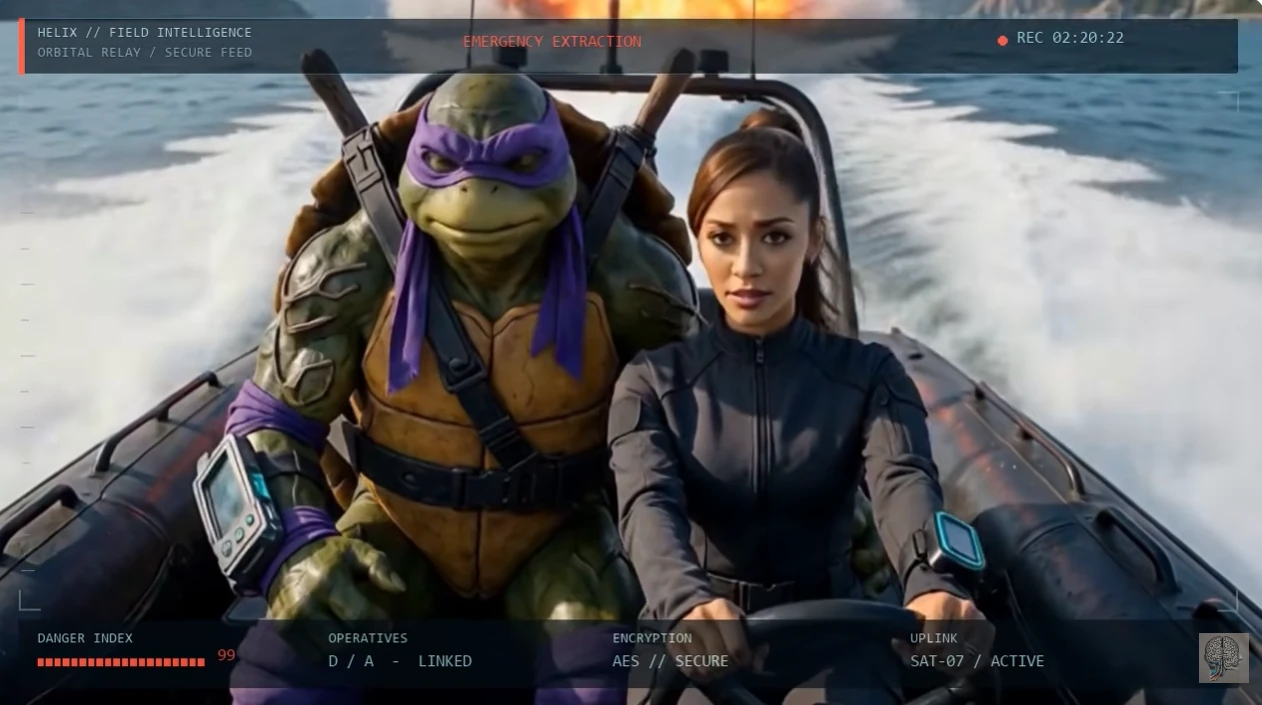
Does it stop being Slopcore because the Robots go away?
Not necessarily.
Slopcore has something traditional musical definitions don't always account for.
A recognizable audiovisual culture.
Synthetic performers. Robots. Futuristic technology. HUDs and overlays. Animated lyrics. Literal references to software, machines, internet culture, and the world we're living in.
These elements are becoming part of Slopcore's visual language.
A production might move away from its musical roots while retaining much of that identity.
Which suggests something important: Slopcore may ultimately be defined as much by the experience surrounding the music as by the music itself.
Enter Koa-core: When Artists Become Their Own Genres
And then there are creators like Koa-sama.
Depending on who's describing his music and videos, some call them Slopcore. Others have another name for his particular creative universe: Koa-core.

It's an interesting distinction, and perhaps a glimpse of where all this is heading.
We're still extremely early in the evolution of AI-generated music and its surrounding culture. The terminology is developing almost as quickly as the technology itself.
Maybe Slopcore becomes one recognizable branch of something larger.
Maybe Popcore emerges as a distinctly pop-oriented expression. Koa-core reflects an individual creator's recognizable style. And perhaps we'll eventually encounter unexpected offshoots from entirely different cultures. Hell, maybe even Gooncore becomes a thing. Not exactly difficult to imagine.
What if -core itself becomes part of the vocabulary for identifying these new creative cultures?
There's already a long tradition of attaching -core to musical and aesthetic movements. But AI introduces another possibility: creators can develop distinctive sounds, entire visual worlds, recurring synthetic performers, and recognizable production styles.
An individual artist's aesthetic can become recognizable enough to earn its own name.
Perhaps we're not watching one genre struggle to define itself. Perhaps we're watching several genres begin to separate from one another.
So Where Does Popcore Begin?
Maybe Popcore is a useful question rather than a necessary new genre.
What happens when AI-generated music adopts the familiar structures and aesthetics of mainstream pop while leaving behind most of Slopcore's experimental identity?
It doesn't make the music inferior.
There's enormous creative potential in AI-assisted pop, just as there is in rock, country, orchestral music, and countless other styles.
But there's value in maintaining distinctions.
If every AI-generated song and music video becomes Slopcore, the term eventually stops communicating anything meaningful.
A culture needs enough shared characteristics that people can recognize it.
Not rigid rules. Not gatekeepers. Just an identity.
And perhaps some of the music currently called Slopcore is already pointing toward something different.
Let the Culture Evolve
Slopcore is still too young for anyone to declare its permanent boundaries.
Anabology and other early creators helped establish recognizable sounds, imagery, and creative approaches. But their work doesn't need to become a permanent template.
New artists will introduce different sounds. Some will push closer to pop. Others will become increasingly experimental. And some, like Koa-sama, may develop styles distinctive enough to acquire their own names.
Recognizing differences isn't gatekeeping. It's how we begin to understand what makes each creative culture distinctive.
Maybe the question isn't whether Popcore, Koa-core, or whatever comes next belongs under the Slopcore umbrella.
Maybe we're witnessing the early stages of an entirely new creative landscape, where genres, aesthetics, and individual artists develop identities that haven't even been named yet.
At SlopRevolt, we're interested in watching that process unfold, not deciding who gets admitted.
Slopcore might be one of the first names we're learning. It certainly doesn't have to be the last.
SlopRevolt documents the artists, sounds, and evolving identity of the Slopcore movement. These observations are part of an ongoing conversation, not a set of rules for what creators must produce.