CULTURE / EDITORIAL
Slopcore and the Freedom to Stop Seeking Approval
What does a growing culture of AI-generated music tell us about our need for acceptance?
SLOP REVOLT / CULTURE ·
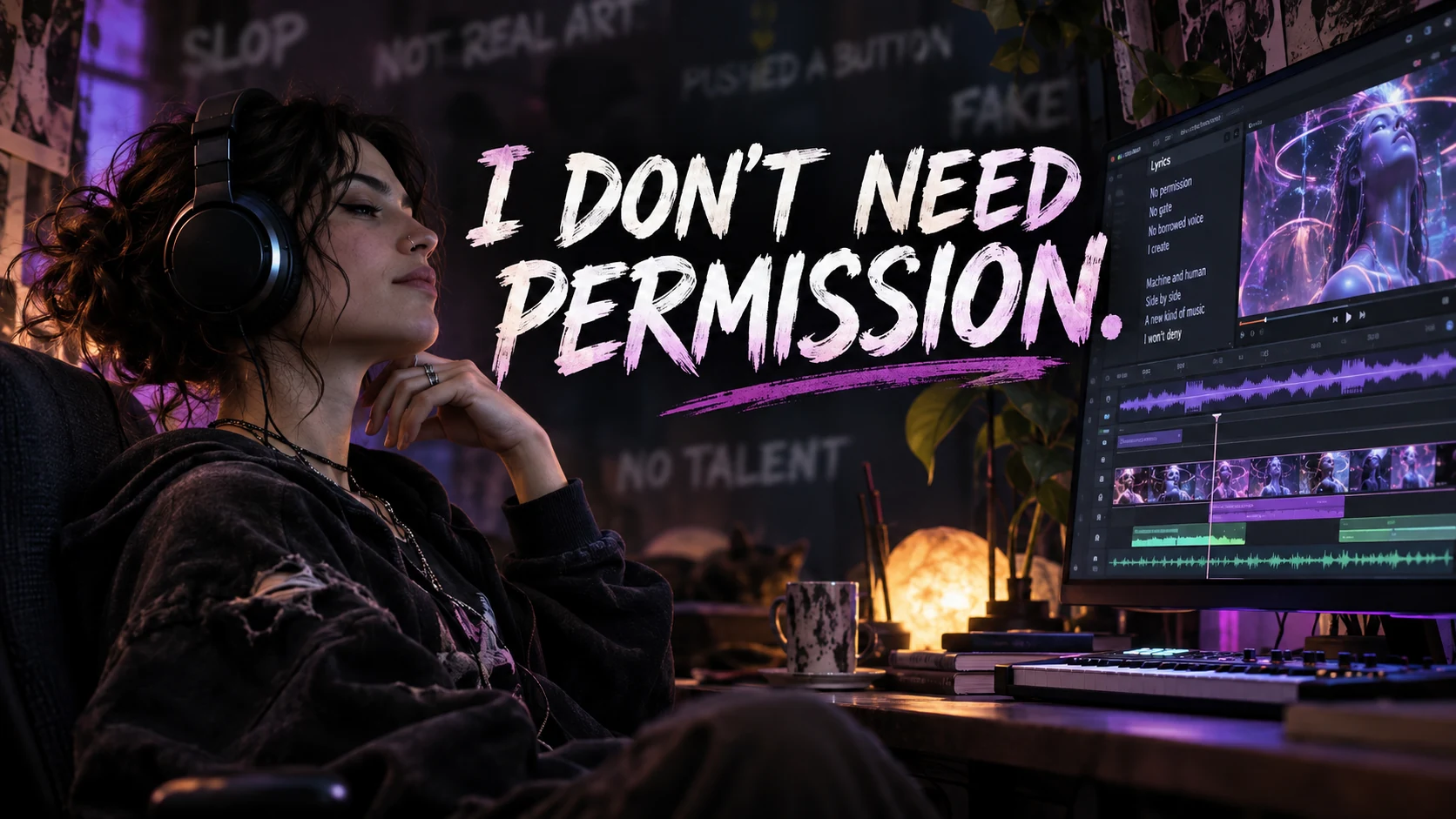
There's something happening beneath the surface of Slopcore that might be more important than the music itself.
Artists from different genres are gathering under the same banner. Dubstep, pop, rock, electronic music, and styles that barely resemble one another are increasingly identifying with Slopcore.
We've already asked whether all these styles actually belong to the same genre.
But perhaps we're asking the wrong question.
What if people aren't coming to Slopcore because of what it sounds like? What if they're coming because of what it represents?
The First Big Middle Finger
Let's acknowledge something about creating music with AI.
The critics have been relentless.
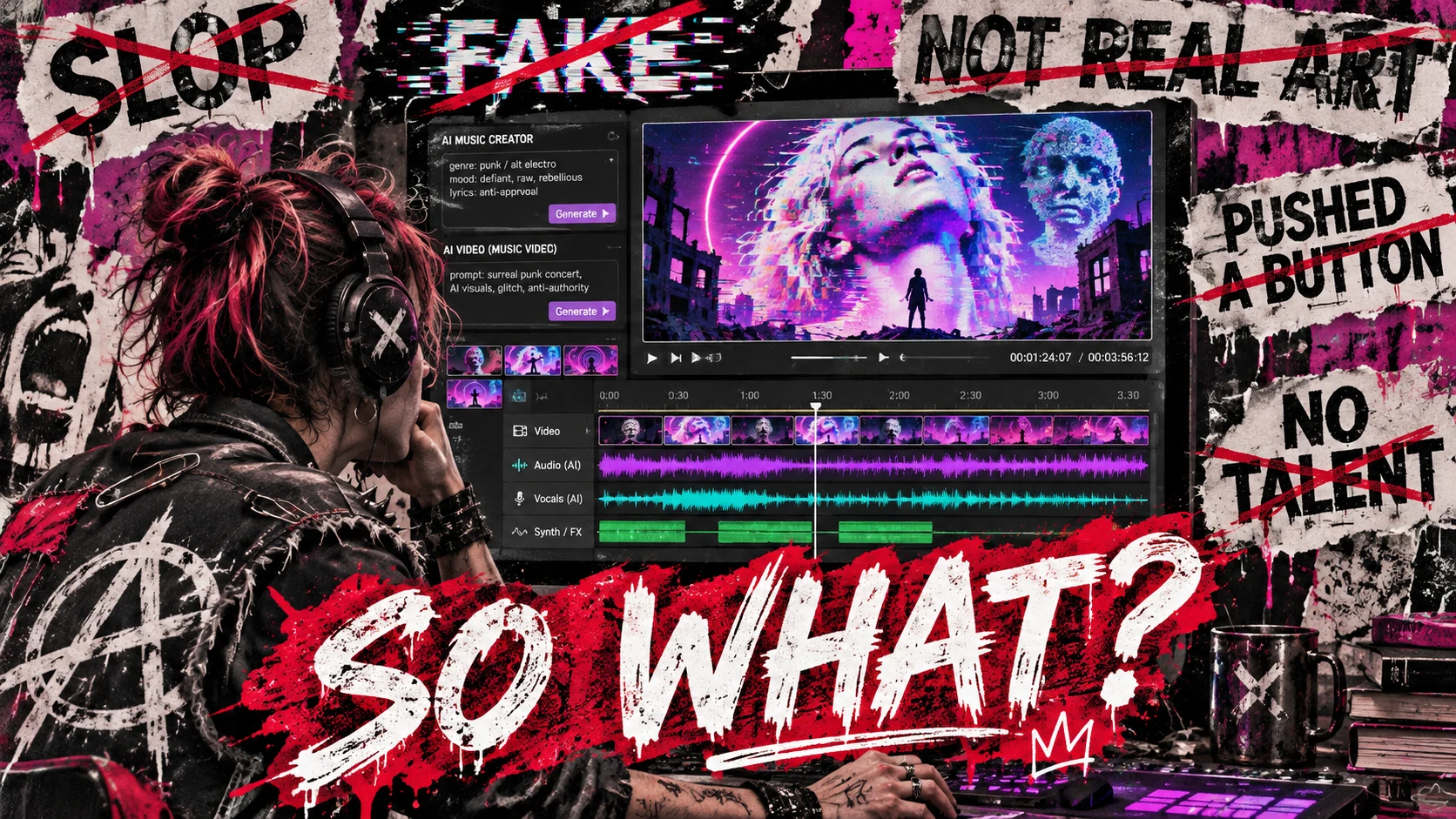
It's not real music. You're not a real artist. You pushed a button. It's soulless. It's slop.
For someone who has spent hours writing lyrics, experimenting with generations, editing videos, and refining a creative vision, those dismissals can get pretty tiresome.
And then something interesting happened.
Instead of running away from the insult, people started embracing it.
You think it's slop? Fine. We'll call it Slopcore.
There's something liberating about taking a word intended to humiliate you and turning it into a badge of belonging.
Slopcore might be the first big collective "we don't care" moment for AI music creators.
Not because criticism has stopped mattering, but because creators are beginning to refuse the idea that someone else's approval determines whether their work deserves to exist.
Maybe They're Not Here for the Dubstep
This could explain something we've been noticing.
A growing number of artists identifying with Slopcore don't necessarily share its early musical characteristics. Some produce straightforward pop. Others create rock, ballads, or entirely different styles.
From a genre-classification perspective, that can seem confusing.
But from a cultural perspective, it makes considerably more sense.
Perhaps they're not claiming to make dubstep-inspired, futuristic electronic music.
Perhaps they're saying, "I'm making something with AI. I'm proud of it. And I'm tired of being told I shouldn't be."
Slopcore gives that attitude a name.
For creators who have felt dismissed before their work was even heard, that can be more meaningful than belonging to a precisely defined musical category.
The Difference Between Approval and Appreciation
There's an important distinction here.
Artists want their work to be heard. They want people to appreciate what they've created. There's nothing wrong with that.
But appreciation and permission are two very different things.
You can welcome feedback without surrendering your creative identity to whoever happens to be criticizing you.
You can recognize that a song needs improvement without accepting that it has no value because AI helped produce it.
And you can be proud of something even when the audience consists of twenty YouTube views and a friend who thinks it's fantastic.
The value of an artistic experience doesn't begin when somebody else approves of it.
That doesn't mean every creation is equally accomplished, or that criticism is worthless. Good criticism helps artists improve.
But dismissal isn't criticism. Telling someone their work doesn't count because of the tools they used contributes very little to the conversation.
And that's where Slopcore's defiant attitude becomes meaningful.
When Belonging Creates Confidence
There's a certain irony in all this.
A movement built around saying "we don't care what you think" may actually be giving people something they've been looking for all along.
Acceptance.
Not necessarily acceptance from the established music industry, professional critics, or people who reject AI-generated art on principle.
Acceptance from other creators who understand why making something matters.
People who recognize the experimentation, the frustration, the excitement when a generation finally works, and the satisfaction of creating something that previously existed only in your imagination.
That shared experience can give someone the confidence to keep creating.
And perhaps that's why the Slopcore label is attracting artists whose work doesn't fit neatly into its original sound.
Sometimes people need a community before they need a genre.
What Happens When the Dust Settles?
This doesn't mean every form of AI-generated music will remain Slopcore forever.
In fact, the opposite may happen.
As creators become more confident and communities develop, the distinctions between different artistic styles may become clearer.
Pop-oriented creators might establish their own identities. Individual artists may develop recognizable worlds and aesthetics. New names, scenes, and audiences will emerge.
What we're calling Slopcore today might eventually separate into several distinct creative cultures.
And that wouldn't necessarily be a loss.
Perhaps Slopcore's early importance won't be measured solely by the musical genre it becomes.
Perhaps it will also be remembered as the place where creators stopped apologizing for making things.
A place where people found the confidence to experiment before they knew exactly where they belonged.
Make It Anyway
There's room for serious conversations about artistic quality, originality, ethics, and the role of AI in creative work.
Those conversations should happen.
But none of them requires a creator to be ashamed of enjoying something they've made.
You can improve your craft. You can learn from criticism. You can recognize the limitations of your tools.
And you can still say, without apology, "I made this. I love it."
Maybe your music is Slopcore. Maybe it's Popcore, Koa-core, or something nobody has named yet.
We'll sort out the labels as the culture grows.
In the meantime, make your music. Share your videos. Find the people who appreciate what you're doing.
And to the critics who can't get past the fact that you used AI?
They can go sit on a tack.
Because the joy of creating something belongs to the person who created it, whether the rest of the world applauds or not.
Perhaps Slopcore's greatest contribution won't be teaching us what kind of music to make.
Perhaps it will be teaching us that we don't need permission to make it.
SlopRevolt documents the evolving Slopcore scene, its creators, and the culture taking shape around AI-generated music. These editorials explore emerging ideas rather than establish rules for who belongs.